

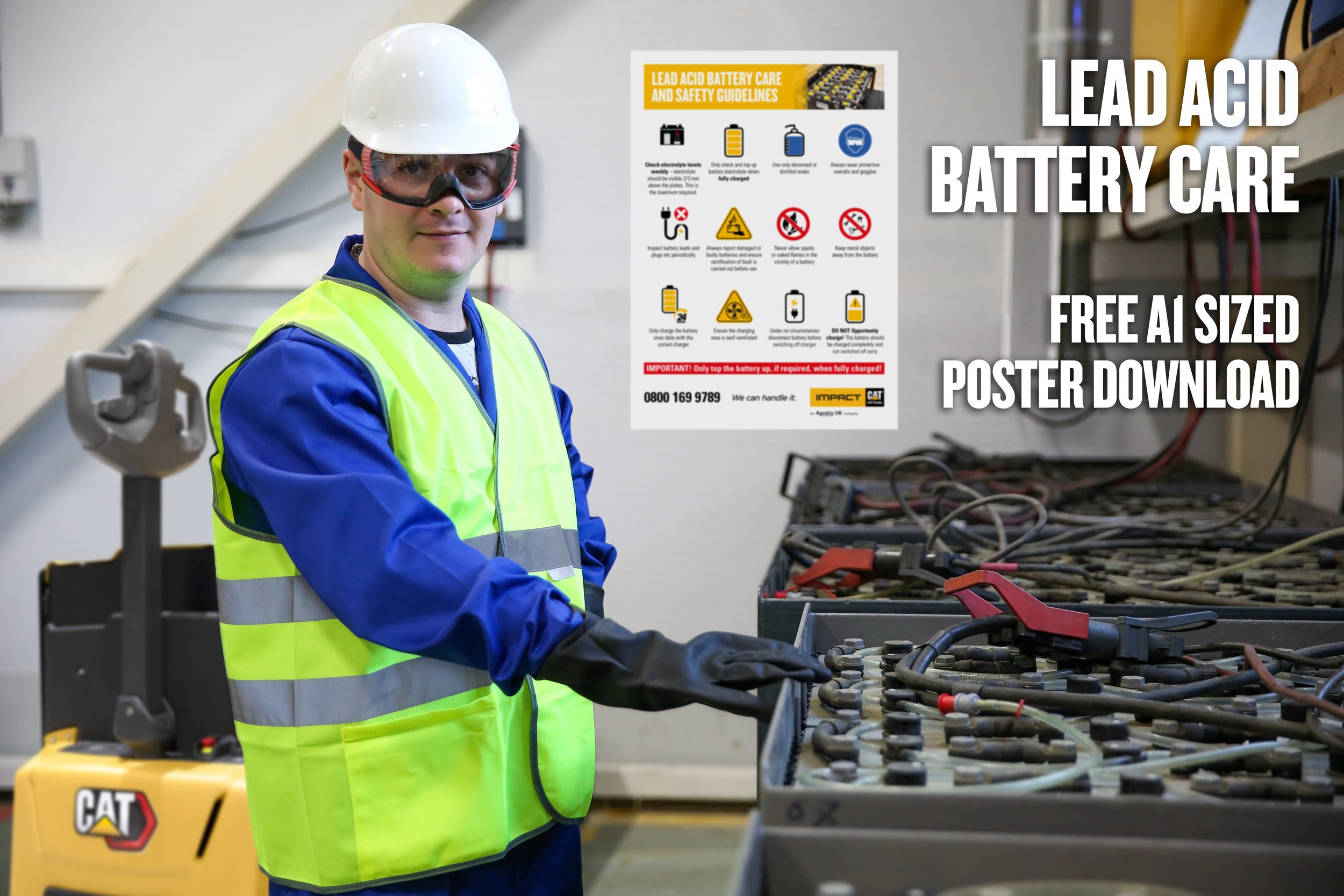
Lead-Acid Forklift Battery Safety Guidelines
Why Lead-Acid Forklift Battery Safety Matters
Workers involved in lead-acid battery maintenance face potential lead exposure through inhalation of fumes or dust and ingestion caused by inadequate hygiene practices. That’s why proper care of lead-acid forklift batteries is essential. Not only to ensure safety and extend battery life, but also to protect the health of your workforce. Whether charging, inspecting or topping up, following the correct procedures significantly reduces risk.

Key Safety Guidelines
Fire and Explosion Prevention
- Never allow sparks or naked flames in the vicinity of a battery – Lead-acid batteries release hydrogen gas during charging, which is highly flammable. Even a small spark can ignite it, leading to dangerous explosions.
- Keep metal objects away from the battery – Metal tools or objects can cause short circuits if they come into contact with battery terminals, increasing the risk of electrical fires or battery damage.
Ventilation and Charging Safety
- Ensure the charging area is well ventilated – Hydrogen gas emitted during charging must be dispersed to prevent accumulation and reduce explosion hazards.
- Under no circumstances should the battery be disconnected before switching off the charger – Disconnecting the battery while it is charging can cause dangerous electrical surges, potentially damaging both the battery and the charger.
Inspection and Maintenance
- Inspect battery leads, plugs and connections periodically – Worn-out or damaged connections can lead to malfunctions or overheating, increasing safety risks.
- Always report damaged or faulty batteries and ensure faults are rectified before use – A defective battery can compromise forklift performance and pose safety hazards to operators.
Electrolyte Maintenance
- Only check and top up battery electrolyte when fully charged – Checking levels when the battery is discharged may lead to overfilling, which can cause acid spills and damage internal components.
- Use only deionised or distilled water – Tap water contains minerals that can cause battery degradation, reducing efficiency and lifespan.
Charging Practices
- Only check/top up when FULLY charged – If the white disc in the clear window is at the top, do not top up. If the disc has dropped, then top up. Ensuring proper electrolyte levels avoids overfilling or underfilling, which can damage the battery.
- LEAD CARBON BATTERY
- Opportunity charging is allowed – You can part-charge or opportunity-charge this battery type. However, it must be given a full charge cycle at least once a week to maintain optimal health and performance.
Do not interrupt full charging cycles: Always allow the battery to complete a full charge before switching off the charger. Interrupting the cycle can lead to poor energy storage, reduced runtime, and decreased battery lifespan.
- Opportunity charging is allowed – You can part-charge or opportunity-charge this battery type. However, it must be given a full charge cycle at least once a week to maintain optimal health and performance.
- LEAD-ACID BATTERY WITH AUTOFILL SYSTEM
- DO NOT opportunity charge: This battery must be charged fully once per day using the correct charger. Avoid part-charging or switching off mid-charge, as it can negatively impact performance and battery life.
- Autofill system caution: The “white dot in the window” can sometimes stick in the raised position, falsely indicating that the cell is full. This may cause the cell to run dry and eventually fail. It’s worth checking the other cells — if one appears high while the others are low, report it immediately so it can be inspected and repaired.
Personal Protection
- Always wear protective overalls and goggles – Batteries contain corrosive acid and can emit harmful gases. Proper PPE helps prevent burns, injuries, and exposure-related health risks.
By following these safety measures, operators can maximise battery performance, ensure safe handling and prevent hazards in the workplace.
Download Your Free Safety Poster
Get your free Lead-Acid Forklift Battery Safety Guidelines Poster — available in two versions: Lead Carbon Battery and Standard Lead-Acid with Autofill.
Choose the version that matches your equipment and display it in your charging area to keep best practices front of mind.
LEAD CARBON BATTERY:
LEAD ACID BATTERY WITH AUTOFILL:
Take Safety One Step Further
Impact Handling offers a free site survey to assess your operations, optimise efficiency and ensure compliance with health and safety standards. Our experts will work with you to identify risks, improve processes and create a safer, more efficient workplace.
Email us to book your free site survey today!


